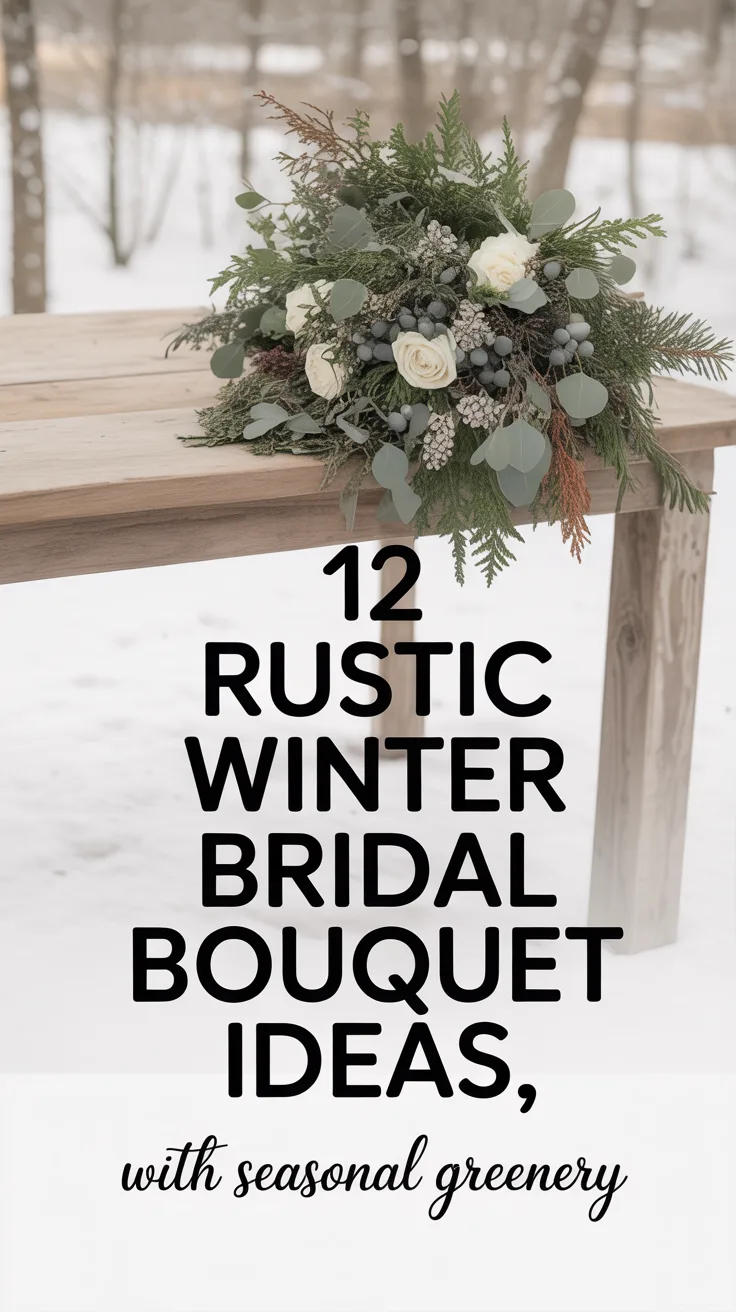
Introduction to Rustic Winter Bouquets
As a wedding florist who’s designed hundreds of bridal bouquets, I’ve always had a special place in my heart for rustic winter bridal bouquets. There’s something magical about capturing the essence of the winter season through thoughtfully arranged seasonal greenery and natural elements.
When I first started creating winter wedding bouquets, I made the mistake of trying to force summer blooms into winter designs. The results were costly and often disappointing. I’ve since learned that embracing what winter naturally offers creates the most stunning and authentic arrangements.
A well-crafted rustic winter bouquet tells a story of the season—frosty mornings, evergreen forests, and the quiet beauty of nature in repose. These bouquets typically feature a harmonious blend of textured greenery, woodland elements, and subtle pops of color that complement rather than compete with the winter landscape.
Choosing the Right Seasonal Greenery
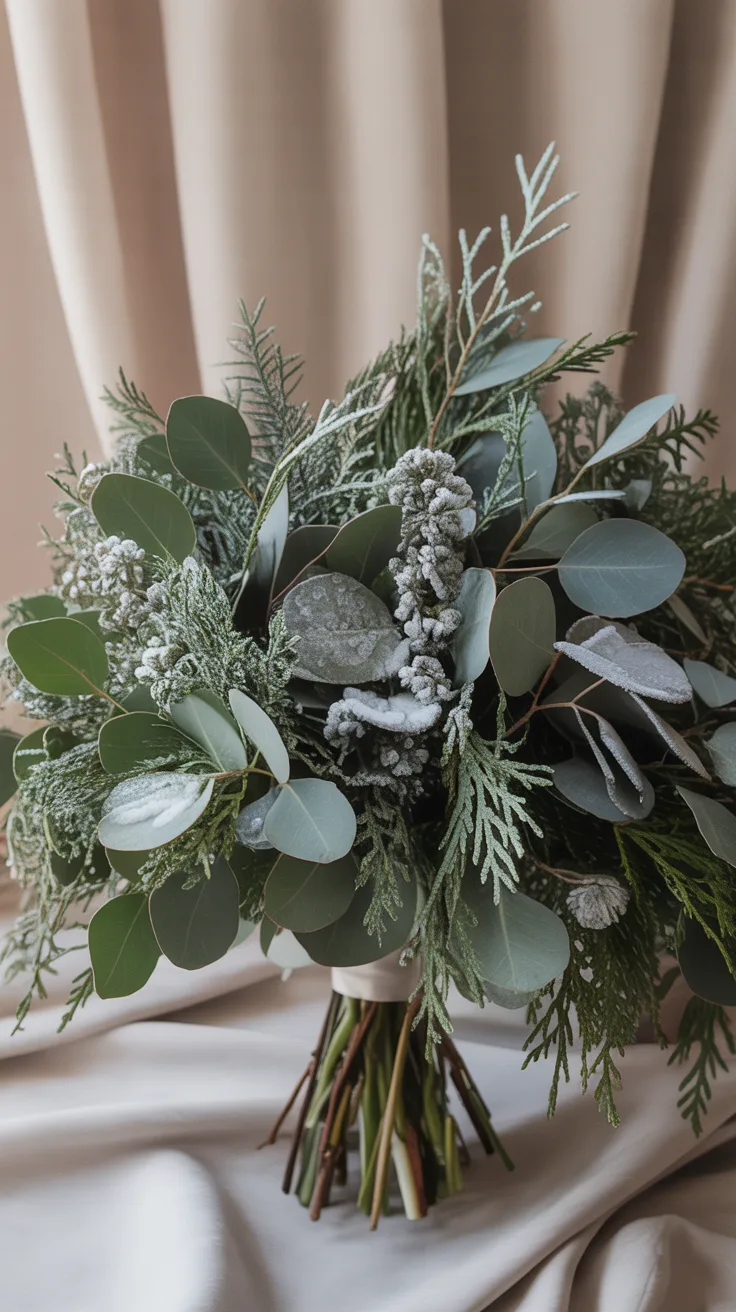
The foundation of any stunning rustic winter bridal bouquet is the greenery. I remember one December wedding where we ran out of our planned greenery and had to forage in my backyard—that unexpected mix of textures ended up being the bride’s favorite element!
When selecting greenery for winter bouquets, I recommend focusing on varieties that naturally thrive in colder months:
- Eucalyptus – Silver dollar, seeded, or baby blue varieties add a frosted, silvery tone
- Evergreens – Cedar, pine, spruce, and juniper bring quintessential winter scents and textures
- Dusty Miller – Its velvety, silver-gray foliage mimics a light dusting of snow
- Olive branches – Provides subtle gray-green tones and delicate structure
- Boxwood – Offers rich green color and structured form
- Lamb’s ear – Adds soft, fuzzy texture and a muted sage color
- Holly – Brings glossy leaves and traditional winter charm (with or without berries)
Pro Tip: Mix at least three different types of greenery with varying textures to create depth and visual interest in your bouquet. I always include something soft, something structured, and something trailing for the perfect balance.
12 Rustic Winter Bridal Bouquet Ideas
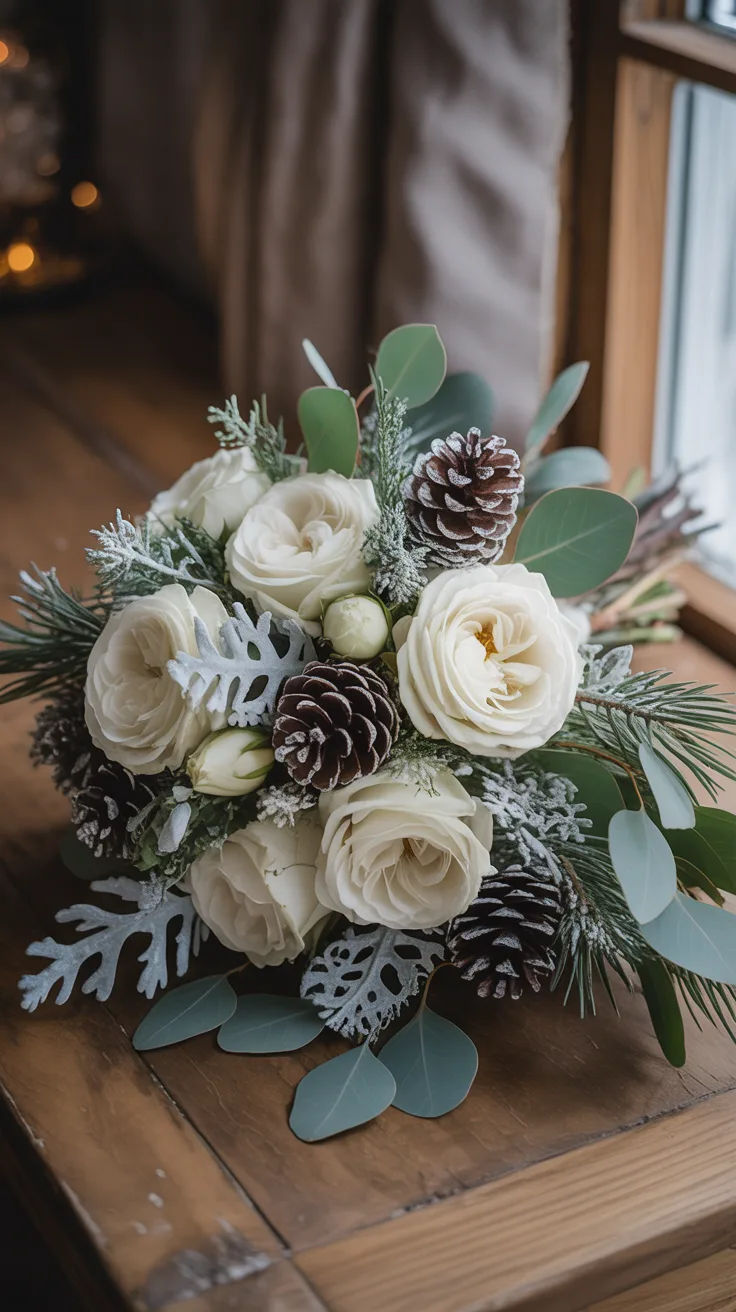
After designing countless winter wedding flowers, I’ve developed these 12 rustic winter bridal bouquet concepts that consistently delight my winter brides:
- Woodland Wonder – Eucalyptus, pine, cedar with pinecones, white roses, and dusty miller
- Frosted Berry – Silver brunia berries, juniper, white anemones, and seeded eucalyptus
- Evergreen Elegance – Multiple evergreen varieties with white ranunculus and subtle gold accents
- Snowy Sage – Sage, eucalyptus, white garden roses, and dried lunaria
- Winter Harvest – Olive branches, dried wheat, white hellebores, and silver dollar eucalyptus
- Forest Floor – Pine, ferns, mushroom caps, white spray roses, and cedar
- Rustic Romance – Lamb’s ear, brunia berries, garden roses, and trailing ivy
- Frosty Foliage – Blue thistle, dusty miller, white ranunculus, and juniper
- Woodland Wreath – Circular-shaped bouquet with boxwood, pine, white spray roses, and pine cones
- Vintage Winter – Dried lavender, eucalyptus, white anemones, and dried orange slices
- Nordic Inspired – Conifer branches, white berries, dusty miller, and cotton pods
- Minimalist Evergreen – Simple arrangement of varied evergreens with a single white king protea
Pro Tip: When planning your bouquet, consider your wedding dress. Heavily detailed gowns pair beautifully with simpler bouquets, while minimalist dresses can be complemented by more elaborate arrangements.
Incorporating Pine Cones and Berries

Pine cones and berries are the jewelry of winter bouquets. I learned this lesson the hard way after creating a beautiful arrangement that looked flat in photos. Adding these textural elements transformed the entire bouquet!
For pine cones, I recommend using smaller varieties like hemlock or spruce cones rather than large pine cones, which can be heavy and unwieldy. I typically wire small pine cones individually, attaching them to floral picks for easy insertion into the bouquet.
As for berries, my winter favorites include:
- Hypericum berries (available in red, white, and green)
- Silver brunia
- Snowberries
- Privet berries
- Rosehips
- Holly berries (use sparingly as they can bleed)
Pro Tip: When using berries, cluster them in groups of three or five throughout the bouquet rather than spreading them individually. This creates more visual impact and follows the designer’s rule of odd numbers.
Using Dried Flowers and Grasses
Incorporating dried elements into winter bouquets adds wonderful texture and a touch of vintage charm. I once created a bouquet using only fresh greenery and white roses that felt incomplete until I added dried elements—suddenly it came alive with dimension and character.
My favorite dried elements for winter bouquets include:
- Pampas grass – adds height and movement
- Bunny tails – provides soft, whimsical texture
- Dried lavender – contributes subtle color and scent
- Wheat or oats – brings golden tones and rustic texture
- Dried lunaria (silver dollar plant) – adds translucent, pearly discs
- Cotton pods – contributes rustic charm and snowy appearance
- Dried orange or apple slices – offers unexpected color and fragrance
When working with dried materials, I’ve found it’s best to incorporate them after you’ve established the main structure of fresh materials. This prevents the more brittle dried elements from breaking during the arrangement process.
Pro Tip: Spray dried elements lightly with unscented hairspray before using them in bouquets. This helps prevent shedding and extends their longevity throughout the wedding day.
Tips for Arranging and Maintaining Bouquets
Creating a rustic winter bridal bouquet that lasts throughout your wedding day requires some special considerations. I’ve had brides come back in tears when their DIY bouquets wilted before the ceremony, so I’m sharing my professional techniques to help you avoid that heartbreak.
For arrangement:
- Start with a base of hardy greenery to create structure
- Work in a spiral pattern, adding stems at the same angle
- Place delicate elements last to prevent damage
- Secure with floral tape, then wrap with ribbon or fabric
- Keep stems long until the final cut (about 8-10 inches is ideal)
- Use floral wire for support on heavier elements
For maintenance:
- Create your bouquet no more than 24 hours before the wedding
- Store in a cool location (40-50°F is ideal) but not in a standard refrigerator (too cold)
- Place stems in 2-3 inches of water until about an hour before use
- Mist lightly with water (avoid wetting ribbon or dried elements)
- Keep away from direct heat sources and sunlight
- Have your florist or coordinator wrap the handle with a damp paper towel covered in foil for extended freshness
Pro Tip: Always have a few extra stems of greenery and flowers available for last-minute touch-ups. I keep a small emergency kit with floral tape, wire, and scissors for quick fixes before walking down the aisle.
Frequently Asked Questions
What flowers are best for winter bridal bouquets?
The most reliable flowers for winter bouquets include roses, ranunculus, anemones, hellebores (Christmas roses), amaryllis, and carnations. These blooms are typically available year-round and hold up well in cooler temperatures. White, ivory, deep red, and burgundy varieties complement the winter aesthetic beautifully. I’ve found that garden roses and spray roses offer the most versatility and durability for winter arrangements.
How can I make my bouquet look more rustic?
To enhance the rustic quality of your bouquet, incorporate natural, unrefined elements like twine or burlap ribbon instead of satin, asymmetrical rather than perfectly round arrangements, and foraged elements like pine cones, branches, or seed pods. I also recommend leaving stems slightly varied in length at the bottom and wrapping them with natural-looking materials like linen, leather cord, or vintage lace. Hand-tied bouquets with visible stems create a more relaxed, gathered feel than tightly bound formal arrangements.
What are some budget-friendly options for winter bouquets?
Winter bouquets can actually be quite cost-effective when you embrace seasonal elements. Focus on abundant greenery (often less expensive than flowers), incorporate foraged materials like pine cones and branches, use dried elements which can be prepared months in advance, and choose hardy blooms like carnations and chrysanthemums which offer volume at lower prices. I’ve created stunning bouquets using primarily eucalyptus and pine with just a few white roses as focal points. Don’t overlook grocery store flowers either—white carnations in mass can look quite elegant when paired with quality greenery.
How do I preserve my bouquet after the wedding?
To preserve your winter bouquet, you have several options. Air-drying works well for many winter elements—hang the bouquet upside down in a cool, dark place for 2-3 weeks. Silica gel preservation can maintain more of the original color and shape. For a professional approach, consider flower pressing services or resin preservation. I always recommend taking plenty of photos of your fresh bouquet first, as all preservation methods will change the appearance somewhat. Many of my brides select a few key elements from their bouquet to preserve rather than the entire arrangement.
Can I use artificial elements in my winter bouquet?
Absolutely! Winter bouquets are particularly well-suited to incorporating high-quality artificial elements. Modern faux greenery, berries, and pine cones can be nearly indistinguishable from real ones in photos and allow you to prepare your bouquet well in advance. I often mix real flowers with artificial greenery and dried elements for the best of both worlds. If using artificial elements, invest in the highest quality you can afford and look for items with natural variations in color rather than